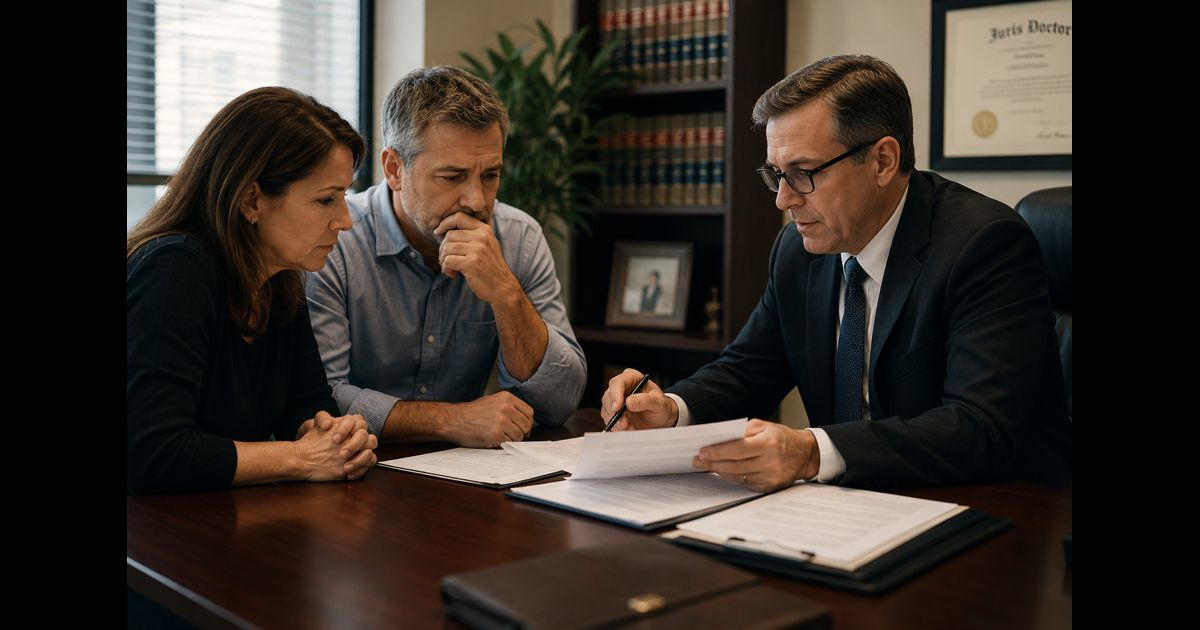
Wrongful death attorneys represent eligible family members or an estate when a person’s death may have been caused by another party’s negligence, wrongful conduct, or intentional act. Their work can include investigating what happened, preserving evidence, identifying the correct people or entities to bring a claim against, handling insurers, and filing a civil case within the applicable deadline.
The legal question is not simply whether a death was tragic or preventable. A viable civil claim usually depends on whether a person or organization had a legal duty, failed to meet it, and caused legally recognized losses. The answers depend heavily on the state where the death occurred, the type of incident, and the family’s legal relationship to the person who died.
A family should not have to decide every issue immediately. But it is sensible to obtain qualified, state-specific legal advice early, especially when evidence may disappear or a public agency, employer, hospital, manufacturer, or commercial carrier may be involved.
What a wrongful death attorney evaluates
An attorney generally begins by assessing four connected questions:
- Whether another party may be legally responsible. This may involve careless driving, unsafe premises, defective products, negligent medical care, dangerous work conditions, abuse or neglect, or intentional violence.
- Who has authority to bring the claim. State laws differ. A surviving spouse, children, parents, dependent relatives, or a personal representative of the estate may have rights, but not every relative automatically has standing.
- Which claims may exist. A wrongful death action usually addresses losses suffered by surviving beneficiaries. A separate survival action, where available, may address losses suffered by the deceased person before death, such as medical costs, lost earnings before death, or conscious pain and suffering. The rules are not uniform.
- Which deadlines apply. The filing deadline can be short, and special notice rules may apply if a government body or public employee could be responsible. Never rely on a general “two-year rule.” For example, New York courts list a two-year wrongful-death limitation period, while other states and case types use different rules.
A responsible attorney will explain uncertainty rather than promise an outcome.
The difference between a wrongful death case and a criminal case
A wrongful death lawsuit is a civil matter. Its purpose is to seek civil remedies from a person, company, or institution alleged to be legally responsible for the death. A criminal case is brought by the government and can result in criminal penalties.
The two proceedings are separate. A civil case may be possible even if criminal charges are not filed, are dismissed, or do not lead to a conviction, because the legal standards and parties are different.
A criminal investigation can also create evidence that matters in a civil case, including photographs, crash reports, witness statements, inspection records, forensic findings, and testimony. Access to those materials may be limited while an investigation is active, so timing and procedure matter.
Why early action can matter
Early consultation is not about rushing a grieving family into litigation. It is about protecting options.
Evidence may be lost quickly. Video footage can be overwritten. Vehicles may be repaired or destroyed. Equipment can be altered. A business may change policies or discard routine records. Witness memories can fade. In medical cases, records must be identified and reviewed carefully, often with independent expert input.
Depending on the facts, a lawyer may send preservation notices asking relevant parties to retain materials such as:
- Surveillance video and electronic logs
- Vehicle, truck, or machinery data
- Maintenance, inspection, and training records
- Personnel and scheduling records
- Product manuals, warnings, and design materials
- Medical records, medication administration records, and billing records
- Text messages, emails, or incident reports
A preservation notice does not prove liability. It helps establish that potentially relevant material should not be destroyed.
Who may file a claim
The answer is controlled by state law, not by who feels closest to the person who died. Some states allow a spouse, children, parents, or other heirs to file. Others require the estate’s personal representative to bring the action for the benefit of defined beneficiaries.
This distinction becomes important in blended families, unmarried partnerships, estranged relationships, cases involving dependent relatives, and deaths where there is no will. California, for example, identifies specific relatives and certain dependents who may have the right to bring a wrongful death claim, while also applying a “one action” rule intended to combine eligible family members’ claims in one proceeding.
A lawyer should identify all potentially interested family members early. Leaving someone out can create delay, conflict, or later challenges to a settlement.
What damages may be available
Damages are the losses that the law allows a claimant to seek. Their availability and calculation vary by jurisdiction. A case may involve economic losses, non-economic losses, or both.
Economic losses can include:
- Funeral and burial expenses
- Medical expenses connected to the final injury or illness
- Lost financial support, wages, benefits, or household services
- The value of care, guidance, or services the deceased would likely have provided
Non-economic damages may include legally recognized loss of companionship, care, guidance, or society. Some states limit certain categories of damages; some distinguish between the beneficiaries’ losses and the deceased person’s own pre-death claim. Punitive damages are available only in particular circumstances and are not a standard part of every case.
No ethical attorney can calculate a reliable value from a brief conversation. A meaningful evaluation requires evidence about the person’s age, health, work history, dependents, expected earnings, family role, medical records, liability evidence, insurance coverage, and state law.
How wrongful death attorneys investigate responsibility
The investigation should fit the incident rather than follow a template.
A fatal vehicle collision may require review of police records, road conditions, dash-camera footage, phone data, toxicology results, vehicle data, and the conduct of every driver or company involved. A commercial-truck case can add driver qualification, hours-of-service, maintenance, dispatch, cargo, and hiring records.
A medical negligence case may require a complete record review and qualified medical experts to evaluate the standard of care, causation, and whether an earlier intervention would probably have changed the outcome.
A workplace death can involve workers’ compensation rules, third-party claims, safety procedures, contractor relationships, equipment design, and government investigations. A defective-product case may require the product itself to be preserved and examined before repairs, disposal, or testing changes its condition.
The point is not to assume fault. It is to establish the facts with records, expert analysis where needed, and a clear chain of reasoning.
Questions to ask before hiring a lawyer
Families can interview more than one attorney or firm. The best choice is not necessarily the loudest advertisement or the largest claimed settlement.
Ask practical questions:
- Have you handled cases involving this type of death?
- Who will personally manage the matter day to day?
- Do you have the resources for investigation and necessary experts?
- How will you identify every potentially responsible party?
- How will you communicate with family members who may have legal interests?
- Are there urgent preservation steps or notice deadlines?
- Will you evaluate both wrongful death and survival claims?
- How are fees, litigation costs, and any recovery distributed?
- What happens if the case does not result in a recovery?
- Are there conflicts of interest involving other family members or parties?
Ask for plain-language answers. A family should understand who the client is, what decisions require their consent, how expenses are handled, and how often they can expect an update.
Understanding contingency fees and costs
Many plaintiff-side wrongful death attorneys use a contingency-fee arrangement, meaning the attorney fee is generally paid from a recovery rather than upfront. That does not mean the financial terms are identical from firm to firm.
The written agreement should distinguish between the attorney’s percentage fee and case costs. Costs can include filing fees, record collection, expert reviews, depositions, investigators, exhibits, and trial preparation. Families should ask whether costs are deducted before or after the fee is calculated and whether any costs are owed if there is no recovery.
The agreement should be readable. Do not sign under pressure or assume every firm uses the same terms.
Avoiding common mistakes after a fatal incident
A family cannot control every part of a crisis, but several choices can protect the integrity of a potential claim:
- Keep documents, receipts, letters, bills, and contact details in one secure place.
- Save original photos, messages, and files rather than editing or reposting them.
- Avoid signing releases, recorded statements, or broad authorizations without understanding their effect.
- Do not repair, sell, discard, or permit destructive testing of a vehicle, product, or equipment that may be important evidence.
- Be careful with social-media posts about fault, injuries, family conflict, or settlement discussions.
- Track contacts with insurers, employers, hospitals, investigators, and public agencies.
- Obtain individualized advice quickly if a government entity may be involved, because special notice requirements can apply.
These steps preserve information; they do not require a family to decide immediately whether to file a lawsuit.
A careful approach to settlement
Settlement can provide certainty and avoid the time, cost, and emotional strain of trial. It can also end legal rights permanently. A sound decision requires more than comparing an offer with a single dollar figure.
The family and attorney should consider the evidence, legal risks, available insurance or assets, the categories of damages permitted by state law, liens or reimbursement claims, tax questions, the interests of all beneficiaries, and whether court approval is required. If minor children are beneficiaries, additional protections or approvals may apply.
A settlement should be reviewed with the same care as a lawsuit. The release language, payment structure, confidentiality terms, and distribution among eligible people can all have lasting consequences.
When to seek immediate legal advice
Prompt, state-specific advice is particularly important when the death involves a public agency, medical treatment, a commercial vehicle, worksite conditions, a defective product, nursing-home care, suspected intoxication, criminal conduct, or uncertainty about who may file.
It is also important when relatives disagree about representation, fault, or distribution. An attorney cannot remove the loss, but a careful legal review can clarify rights, deadlines, evidence, and the decisions that should not be delayed.
Frequently Asked Questions
How long do I have to file a wrongful death lawsuit?
It depends on the state and facts. Deadlines often run from the date of death, but exceptions, medical-negligence rules, claims against public entities, and other laws may change the period. Obtain advice from a lawyer licensed in the relevant state as soon as possible.
Can a family bring a claim if there is no criminal conviction?
Potentially, yes. Civil and criminal cases are separate, and a criminal conviction is not always required for a civil wrongful death claim.
Does every family member receive compensation?
No. Eligibility and distribution are governed by state law and sometimes by estate procedure. A lawyer should identify every person with a possible legal interest before a claim is resolved.
Is a wrongful death case the same as a survival action?
No. A wrongful death claim generally concerns losses suffered by designated survivors, while a survival action may address claims the deceased person could have brought if they had lived. States treat these claims differently.